
In Practice
What depot electrification looks like in practice
The value of an integrated approach becomes clear when energy, battery storage, charging infrastructure and vehicles come together in daily operations.
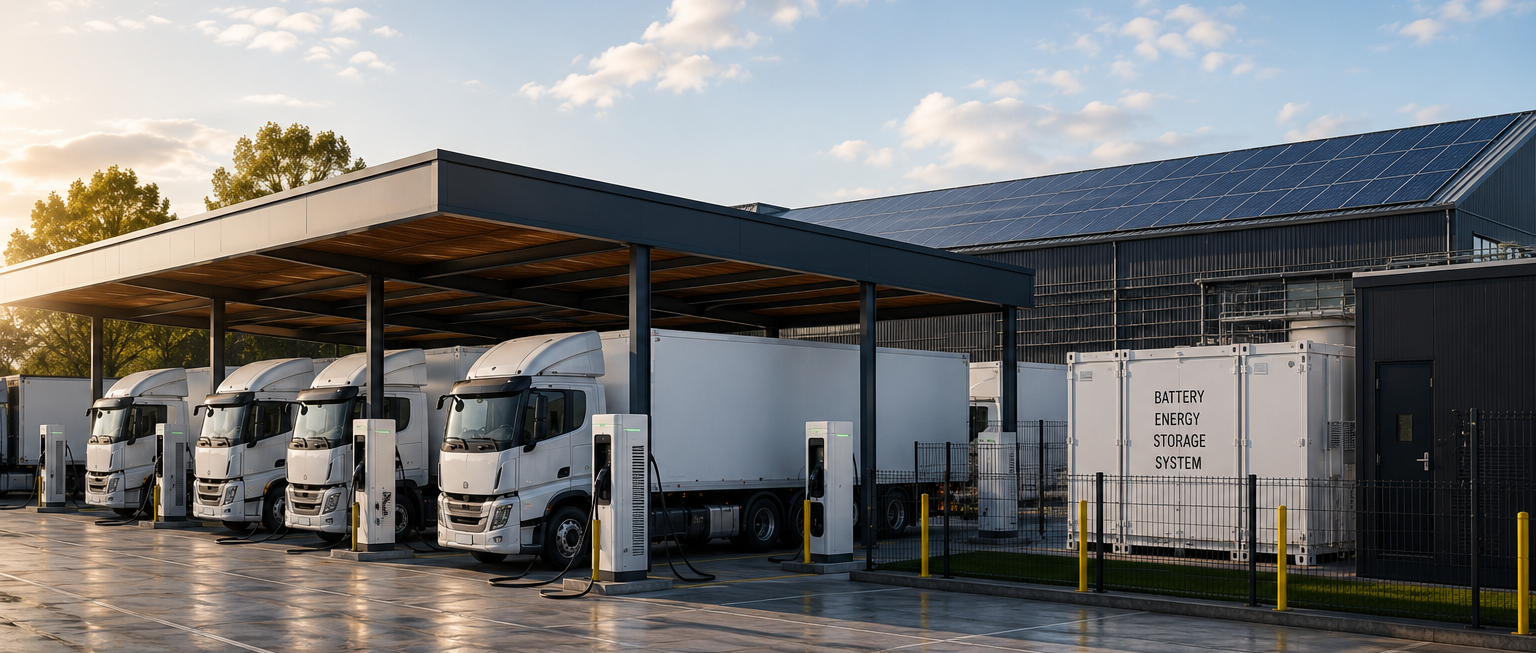
Case Study
Electric charging with limited grid capacity
This case shows how local energy generation, battery storage and charging infrastructure can enable an electric truck operation, even when available grid capacity is limited.
1,7 MWp
Solar Energy
1,1 MWh
Battery Energy Storage
170 kW
Grid Connection
12
Charging Points
10 trucks
Charging Daily
01 The Challenge
Available grid capacity was limited, while multiple electric trucks needed to charge reliably at their own depot.
02 The Solution
Solar energy, battery storage and charging infrastructure were combined into one integrated energy system. This allows energy to be generated locally, stored and deployed when the vehicles need to charge.
03 The Result
An operational charging solution that enables ten trucks to be charged at the depot throughout the working week, despite the limited grid connection.

What this case demonstrates
Limited grid capacity does not have to stop electrification
1 Make better use of grid capacity
By treating generation, storage and charging demand as one system, available grid capacity can be used far more effectively.
2 Technology works best as one integrated system
Solar energy, battery storage, energy management and charging infrastructure need to be aligned with each other and with the daily vehicle schedule.
3 Operations comes first
The goal is not simply to install charging points, but to ensure vehicles are available when the logistics operation needs them.
What is possible at your depot?
A Depot Scan shows what charging capacity you need, what your grid connection can support and which combination of infrastructure, storage and energy management best fits your operation.